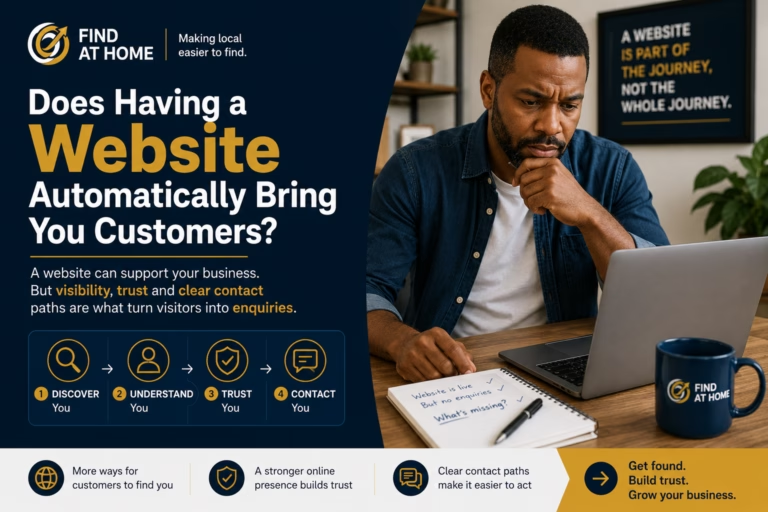


Many capable South African businesses are difficult to find online. Their services may be excellent, but the phone number is buried in an old social post, the Google information is incomplete or the website has not been updated for years.
Customers experience this as uncertainty. They cannot quickly tell what the business does, where it operates, whether it is open or how to request a quote.
Find At Home is being built to close that gap: helping people discover local options and helping businesses manage a clearer, more professional online presence.
The problem is not always a lack of demand
A customer may already be searching for a plumber, school, clinic, restaurant, church, lawyer, mechanic or other local service. The business loses the opportunity when its information is missing, inconsistent or difficult to use.
Common problems include:
- no searchable public profile;
- outdated contact details;
- no clear service area;
- an incomplete Google Business Profile;
- a website that is slow or confusing on mobile;
- no direct WhatsApp or quote path;
- unclear services; and
- nobody responsible for ongoing updates.
Find At Home focuses on practical discovery and lead generation rather than forcing every small business into e-commerce.
A profile designed around customer decisions
A Find At Home listing can bring the information customers need into one structured profile:
- business name and description;
- category and area;
- services;
- contact details;
- call and WhatsApp actions;
- website and email;
- operating hours;
- photographs;
- location information; and
- relevant verification status.
The purpose is not to fill every field with marketing language. It is to help the right customer understand the business and take the next step.
Local discovery by service, category and area
General social feeds are not organised around a customer’s immediate need. Find At Home is structured so users can search and browse businesses, professionals and institutions across South Africa.
A clear category and accurate area improve the chance that the listing appears in a relevant journey. Businesses should not select unrelated categories or claim areas they cannot serve merely to increase exposure.
Relevance builds better enquiries than reach without context.
Direct contact without unnecessary steps
Many local transactions begin with a question, not a checkout:
- Is someone available today?
- Do you serve my suburb?
- Can I get a quote?
- What documents should I bring?
- Can I book an appointment?
Find At Home profiles are designed around direct customer actions such as calling, WhatsApp, email, visiting a website or requesting information. This matches the way many South African small businesses already work.
Businesses can strengthen this journey with the process in our WhatsApp Business guide.
Verification that adds context, not empty promises
Where a Find At Home verification badge is shown, it is intended to reflect the supporting information reviewed for that badge. Verification helps establish identity or business accountability according to the platform’s current process.
It does not guarantee future work, prices or customer satisfaction. Customers should still compare relevant qualifications, quotes, reviews and communication. Our guide to finding a trustworthy local business explains how to use several signals together.
This distinction matters because trust should be earned through clear information and responsible behaviour, not a badge that pretends to remove all risk.
A listing can support a wider online presence
A directory profile is one part of local visibility. The strongest businesses connect several accurate assets:
- a Find At Home listing;
- an eligible and maintained Google Business Profile;
- a mobile-friendly website;
- genuine customer reviews;
- relevant social channels; and
- a reliable enquiry process.
These do not need identical wording, but names, services, contact details and areas should make sense together.
Read our guides to improving your Google Business Profile and local SEO for South African small businesses for the wider foundation.
Managed websites for businesses that need more than a listing
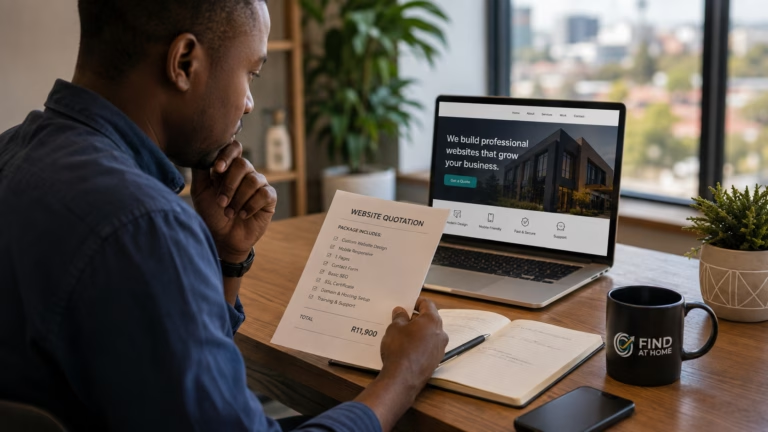
Some businesses need a website but do not want to manage domains, hosting, SSL, business email, updates and technical problems themselves.
Find At Home’s wider direction is a managed online-presence service. Depending on the business’s needs, support may include:
- website design;
- domain and hosting management;
- SSL and website care;
- business email setup;
- Google Business Profile assistance;
- local SEO structure;
- genuine review-growth tools;
- directory listing; and
- ongoing maintenance.
The focus is normally a lead-generation website: helping customers call, WhatsApp, request a quote, book or visit. E-commerce is not necessary for every local business.
What Find At Home does not promise
Responsible online visibility has limits. Find At Home does not promise:
- a guaranteed number-one Google ranking;
- guaranteed leads or sales;
- fake or paid reviews;
- perfect performance by every listed provider;
- visibility based only on who bids the most; or
- instant growth without accurate information and follow-up.
What we can build is a stronger foundation: clear information, useful discovery, professional presentation and easier customer contact.
How a business can prepare a strong listing
Before starting, gather:
- official business or organisation name;
- working phone and WhatsApp numbers;
- monitored email;
- website, if available;
- accurate address or service area;
- business hours;
- a short and full description;
- service list;
- high-quality 16:9 cover image;
- project or premises photographs; and
- supporting verification documents requested for the chosen status.
Do not upload documents or claims that are outdated or belong to another entity. Tell customers exactly what the business can provide now.
How content helps both customers and businesses
Find At Home Articles answers questions that arise before a customer chooses or before a business improves its online presence.
Consumer guides explain how to compare service providers and quotes. Business guides explain Google profiles, local SEO, reviews and customer messaging. These articles support informed decisions rather than publishing generic content only to attract clicks.
As the platform grows, real customer questions and verified business experience should guide future topics.
Frequently asked questions
Is Find At Home only a business directory?
No. The directory is the discovery foundation, while the wider model includes managed websites, hosting, Google Business Profile support, local SEO, review tools and ongoing online-presence care.
Do customers pay to contact a listed business?
The platform is designed to help users discover information and contact the relevant provider directly through available actions. Confirm current listing and user terms on the website as features develop.
Does a Find At Home listing guarantee customers?
No. A listing improves discoverability and presentation but cannot guarantee enquiries or sales. Results also depend on demand, service fit, profile quality, reputation, response and competition.
Can schools, churches and professionals be listed?
Find At Home’s platform is designed to include businesses, institutions and professionals, with appropriate profile fields and categories for each type.
Why use Find At Home if I already have Google or social media?
Customers compare information across channels. A structured local listing can provide another relevant discovery point and direct contact path while supporting the wider consistency of the business’s online presence.
Make the business easier to understand and contact
Getting found online starts with accurate information and a clear next step. The earlier a business organises those basics, the easier it becomes to build a website, improve local SEO and handle enquiries professionally.
Get listed on Find At Home and start building a clearer local presence.
Find At Home services, features, plans and verification processes may evolve. Ensure this article remains aligned with the current website, pricing and terms before republishing or materially updating it.